From a family of artists
A karenza in Pekiti Tirsia Kali is a free-flowing expression of movement—part shadowboxing, part footwork, part storytelling. It’s where technique becomes rhythm, where the blade becomes an extension of intention, and where the practitioner expresses their understanding of the art through motion.
I used to think karenza would feel natural to me the moment I learned it—but it didn’t. In the beginning of my PTK journey, the movements felt foreign, almost disconnected from my body. It wasn’t until I started learning more about my own lineage that something clicked. As I traced the stories of my family—how they created, expressed, and moved—I began to understand what karenza truly was. It wasn’t just technique; it was a language of memory, a thread tied to the artistry that has always run through my bloodline.
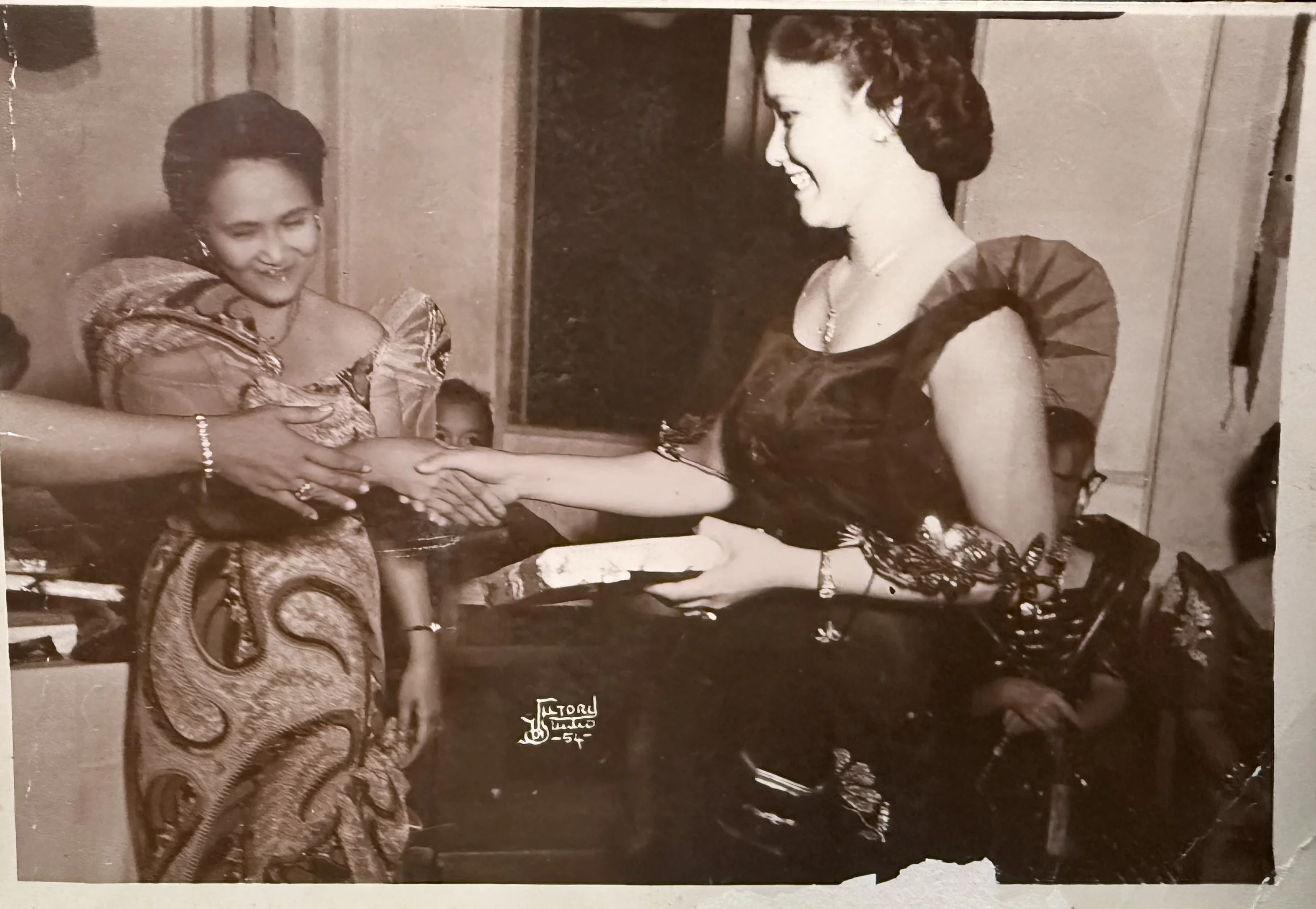
Lola Pikuk winning 1st place. She is wearing her winning gown.
My Grandma Teresa and my Lola Pikuk were the first artists I ever knew. They didn’t label themselves as artists, but their hands told the truth. Their creativity lived in the quiet mastery of dressmaking—precision, rhythm, and intuition stitched into every seam.
Lola Pikuk won first place in Mrs. Largo’s Realistic School Fashion Show in 1953 for her traditional dressmaking, a craft she elevated with both skill and soul. Grandma Teresa, entirely self-taught, made every gown and dress her children wore. They shaped identity through fabric, creating beauty from nothing but thread, time, and patience.
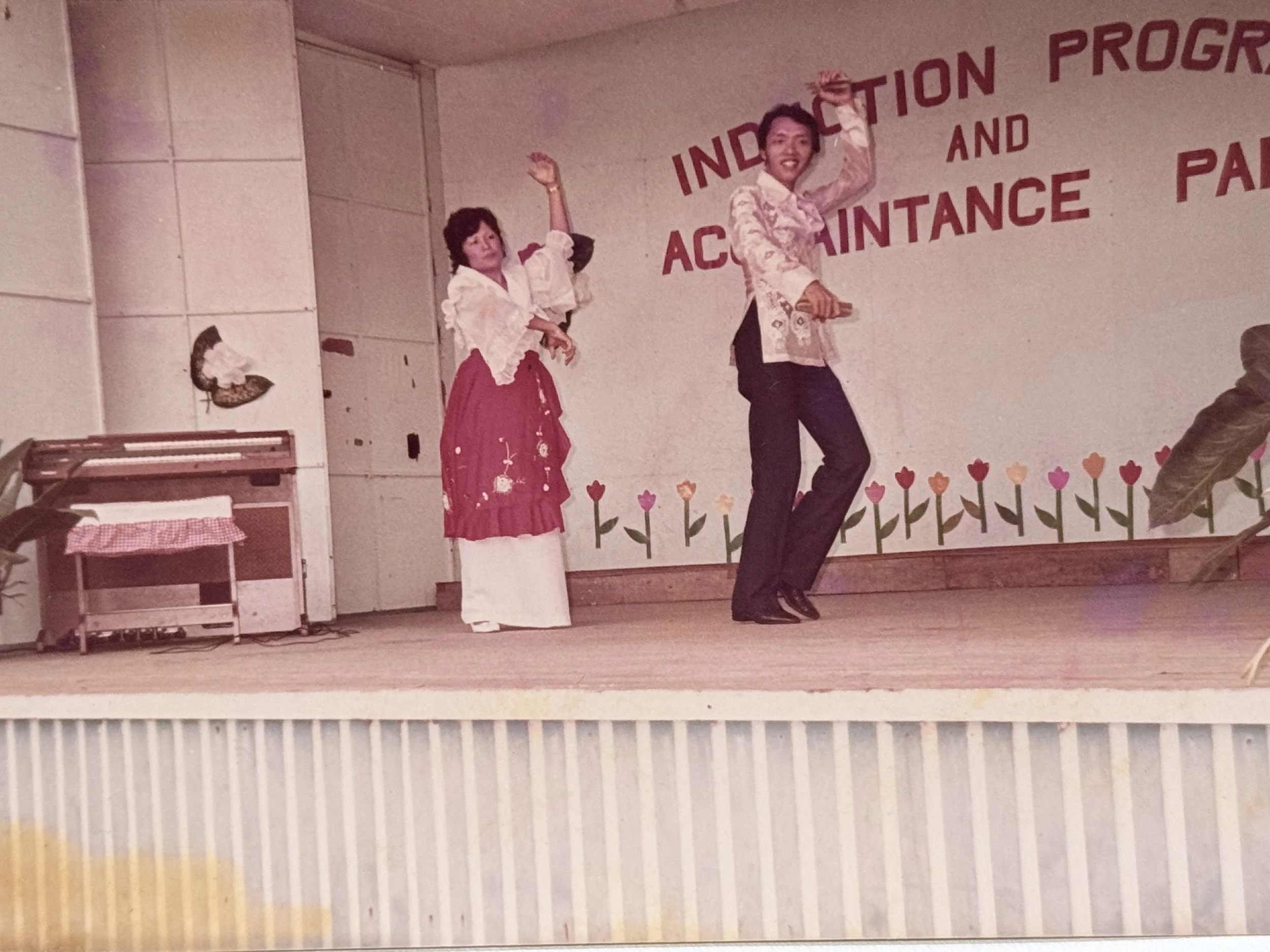
Mom and Dad performing La Jota Moncandeña at the Dominican School.
My parents inherited that same artistic spirit, but expressed it through movement. My dad danced in a folk dance troupe in high school, and my mom learned folk dances as well. At every party or gathering, without fail, they were dancing—moving with joy, rhythm, and a kind of effortless storytelling. That was their art: bodies speaking through motion.
So when I draw, and when I perform a karenza, it feels like I’m weaving those generations together. Drawing has always been my language. But PTK became the movement version of it—lines in the air, rhythm in the body, a silent choreography of thought and feeling. Karenza began to feel like my parents’ dancing, and every stroke of my pen echoes the craft of my grandparents.
By combining drawings and PTK, I feel a bridge forming—between generations, between time, between ways of knowing. Art has always lived in my family; I’m simply carrying it forward in my own form. My purpose in PTK isn’t just about combat or structure—it’s about honoring the creativity and resilience woven into my lineage. It’s remembering that movement is memory, art is inheritance, and every karenza is a dance that connects me back to them.
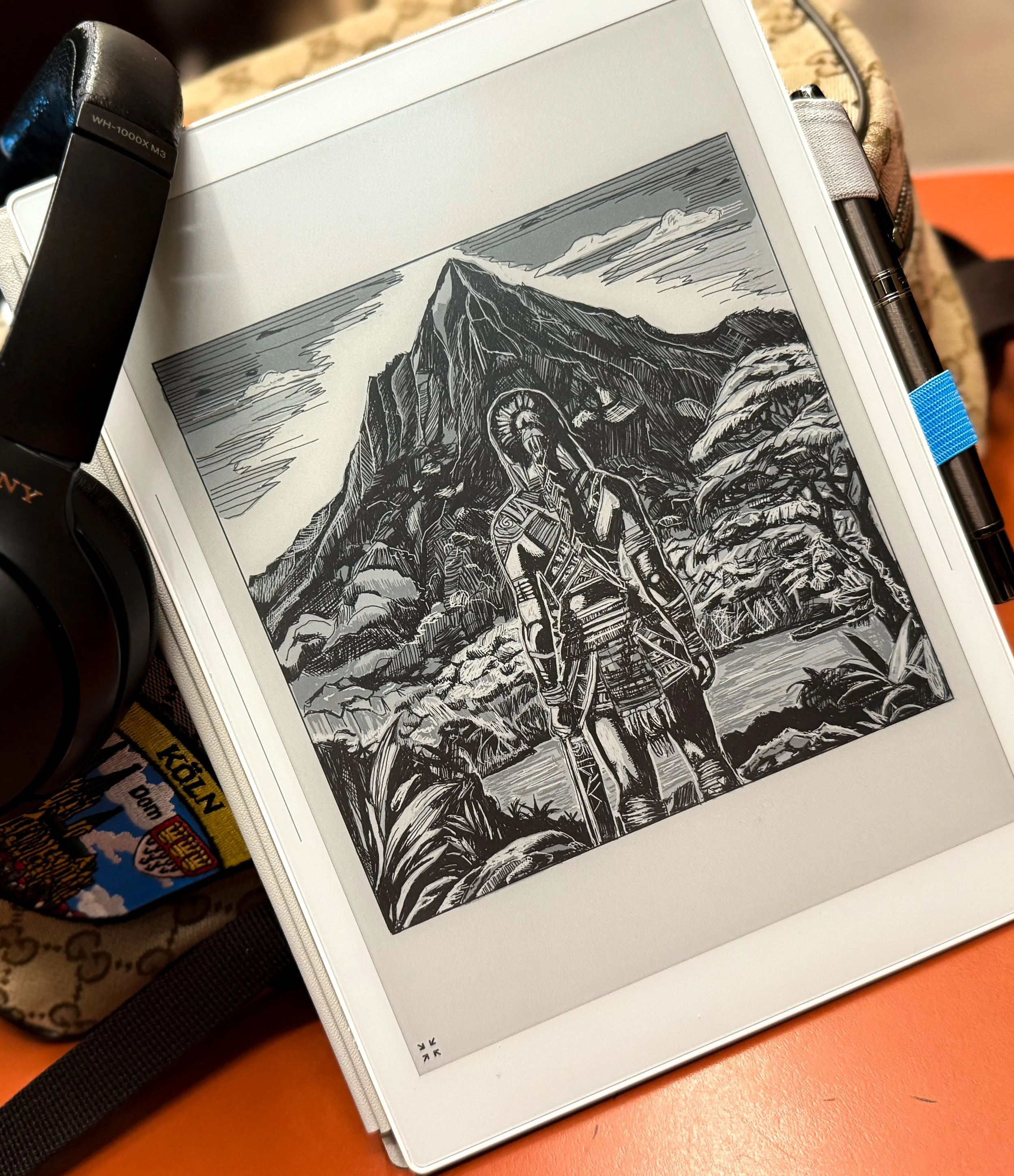
My Babaylan drawing on Supernote
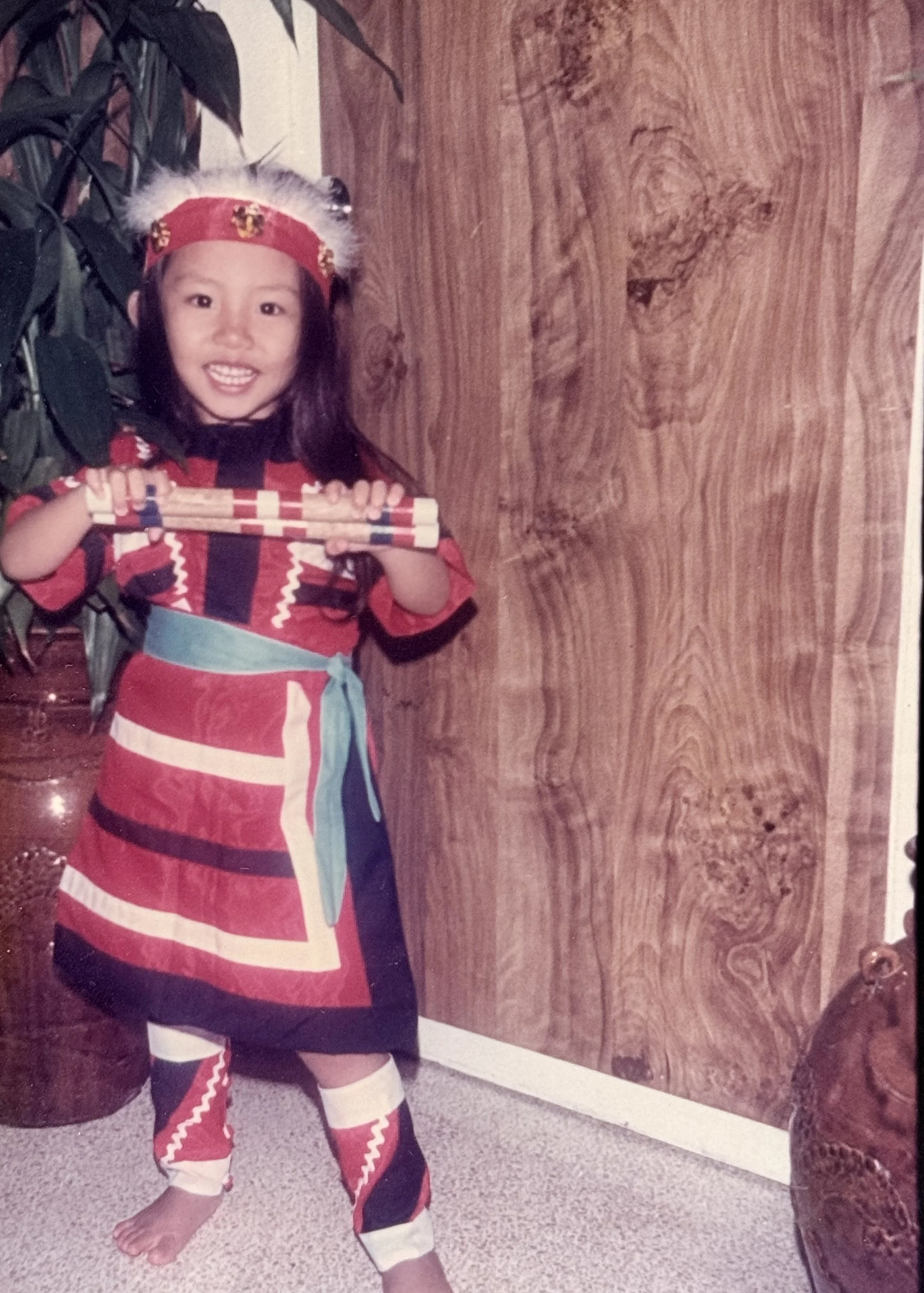
Mini Me.
