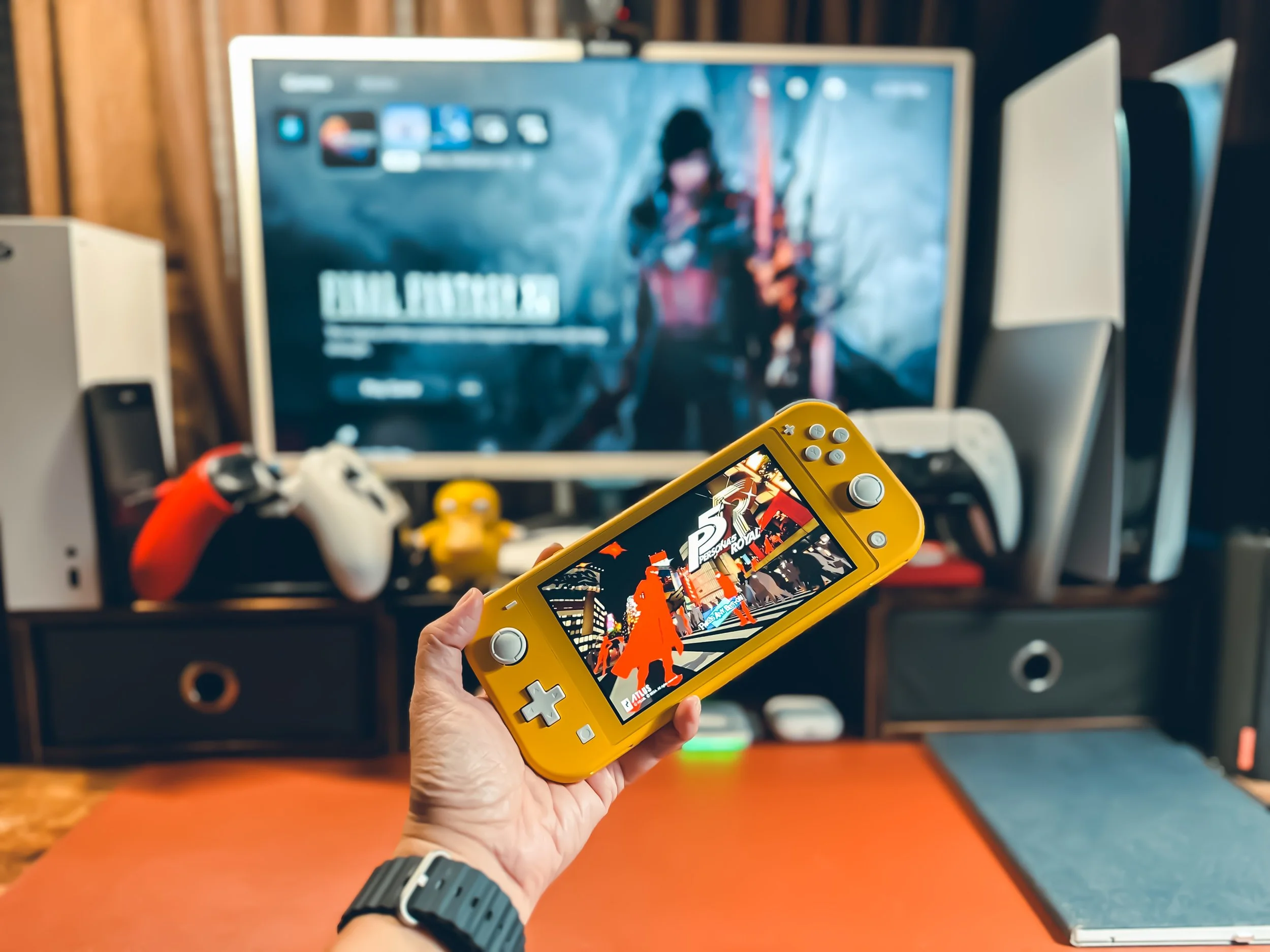
Persona 5 is one of my favorite JRPGS of all time.
When the original Nintendo Switch launched, I wasn't one of the people standing in line to buy one. In fact, I skipped it entirely. Years later, I picked up a Switch Lite, and that little handheld ended up becoming one of my most-used gaming devices during my ACL recovery. When you're spending months focused on physical therapy and learning how to trust your knee again, you suddenly find yourself with a lot of downtime. The Switch Lite helped fill many of those hours.
Eventually, I added a Steam Deck OLED to my collection. On paper, it seemed like the perfect handheld for me. It could play almost anything I wanted. My Steam library was growing, the sales were impossible to ignore, and there was something exciting about carrying what felt like an entire gaming PC in my backpack. For a while, it was exactly what I wanted.
Over time, though, I noticed something happening that I hadn't expected.
Every Steam sale added more games to my library. Every recommendation from a friend became another title waiting to be played. Whenever I traveled, I brought hundreds of games with me. The irony was that despite having access to more games than ever before, I was actually finishing fewer of them.
I would sit down at an airport gate, open my Steam Deck, scroll through page after page of games, and spend more time deciding what to play than actually playing. The problem wasn't that the Steam Deck couldn't play enough games. The problem was that it could play too many.
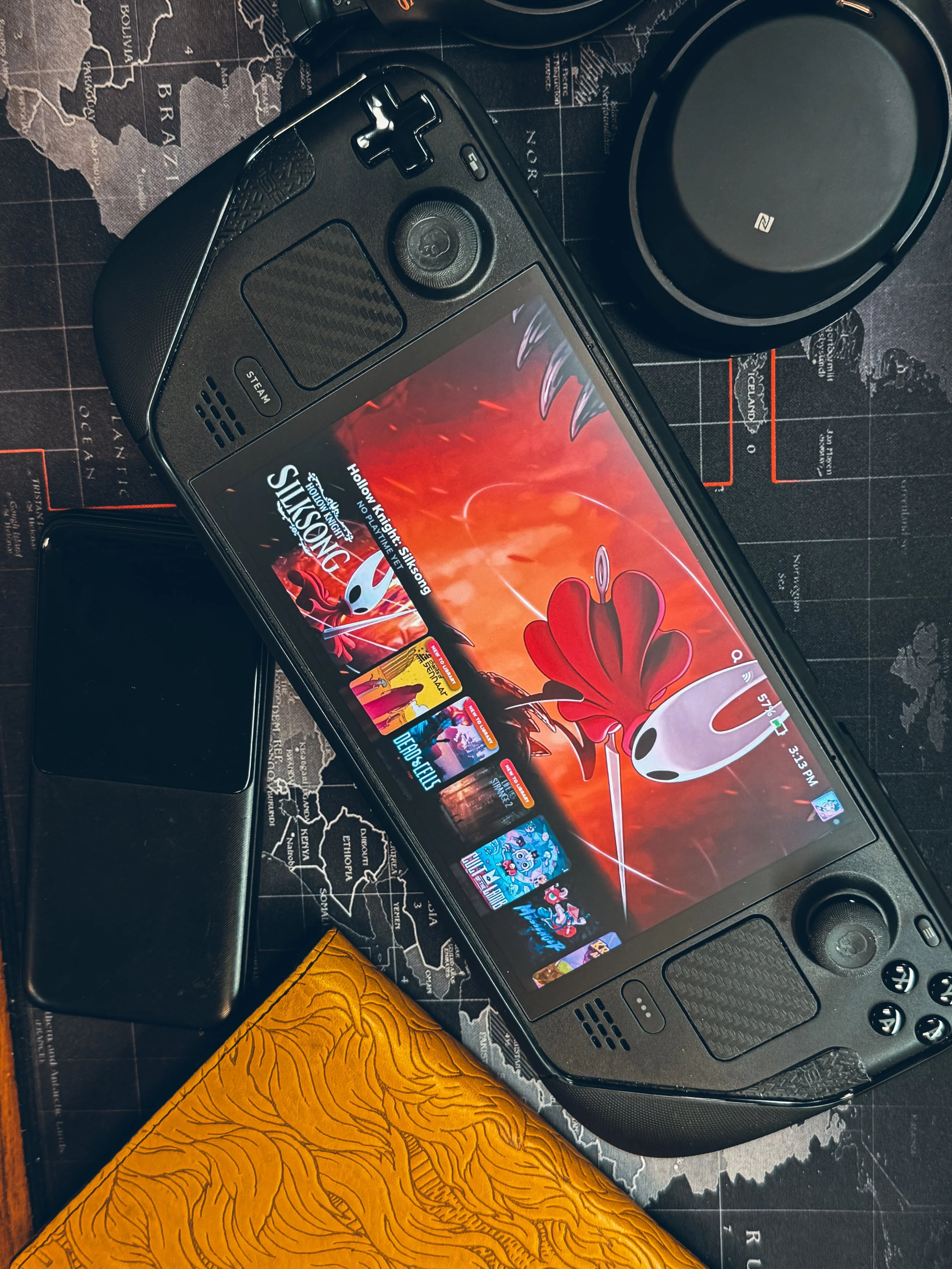
The OLED screen on the Steam Deck is something I miss on the Switch 2.
At the time, I didn't really recognize what was happening. I just knew that my backlog was growing faster than I could keep up with it. Looking back now, I think I was experiencing a form of decision fatigue. When every option is available, choosing one becomes surprisingly difficult.
That brings me to the Switch 2.
Unlike many Nintendo launches, I wasn't rushing to buy one. My Steam Deck already handled everything I needed, and I wasn't convinced that I needed another gaming device. But after spending time with the Switch 2, I noticed something that caught me completely off guard.
I was finishing games again.
Not because the hardware was more powerful. Not because the graphics were better. Not because Nintendo had suddenly solved some technical problem that everyone else had missed. I was finishing games because I was actually playing them.
The more I traveled with the Switch 2, the more I appreciated how simple the experience felt. It slips easily into a travel bag, takes up very little space, and feels purpose-built for the moments that travel naturally creates. Whether I'm waiting at an airport, sitting on a train, relaxing in a hotel room, or winding down at the end of a long day, the Switch 2 feels effortless to pick up and use.
The detachable Joy-Cons make a bigger difference than I expected. In a hotel room, I can set the console on a table, detach the controllers, and immediately start playing without needing any additional accessories. It feels less like setting up a device and more like simply continuing an adventure.
One thing that surprised me was how much I came to appreciate physical games again. With the Steam Deck, my entire library travels with me. On the surface, that sounds like a huge advantage. In practice, I've found that having fewer options can actually create a better experience.
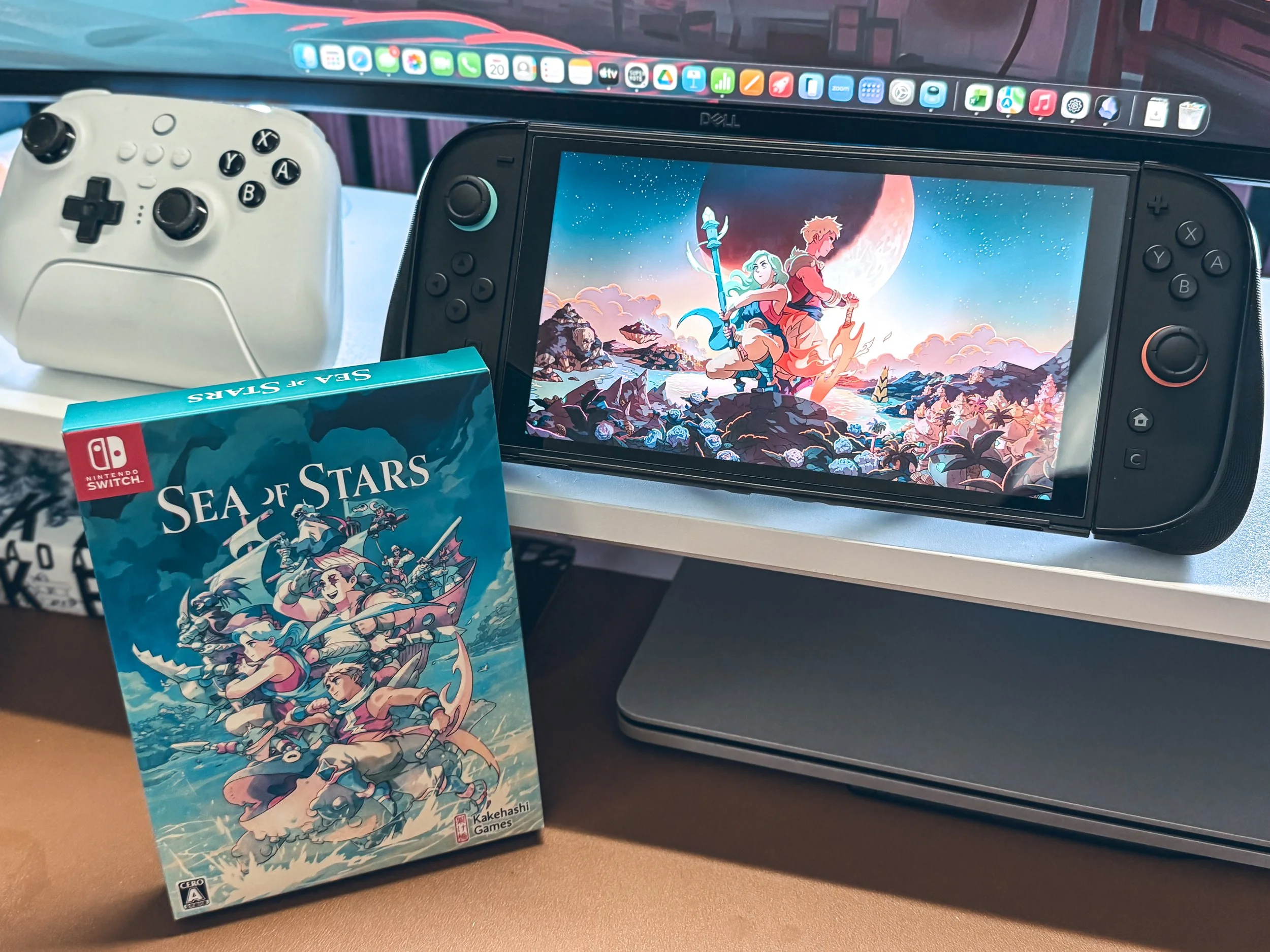
I finally finished this game. Sat in my backlog for almost 3 years. Great game.
When I travel with the Switch 2, I usually bring only a few games. That simple limitation changes everything. Instead of asking myself which game I want to play from a list of hundreds, I'm focused on the handful of adventures I intentionally packed for the trip. I spend more time with each game. I learn its systems. I become invested in its story. Most importantly, I actually finish it.
The Switch 2 also feels different because it naturally encourages shared experiences. The Steam Deck has always felt like a personal device. It's fantastic for solo gaming, but it rarely invites others into the experience. The Switch 2 is the opposite. Hand someone a Joy-Con and suddenly you're playing together. Whether it's a family gathering, a night in a hotel room, or simply killing time with friends, the system makes multiplayer feel effortless.
Travel isn't just about the places we visit. It's also about the people we spend time with along the way, and the Switch 2 fits surprisingly well into those moments.
Of course, the system isn't perfect. Nintendo games are rarely cheap. I still wish it had launched with an OLED screen. Battery life could always be better, and there are features I'd love to see added in future updates. None of those issues are deal breakers for me, but they're worth mentioning.
What fascinates me most is that I originally thought I was buying another gaming device. What I actually ended up buying was a solution to a problem I didn't realize I had.
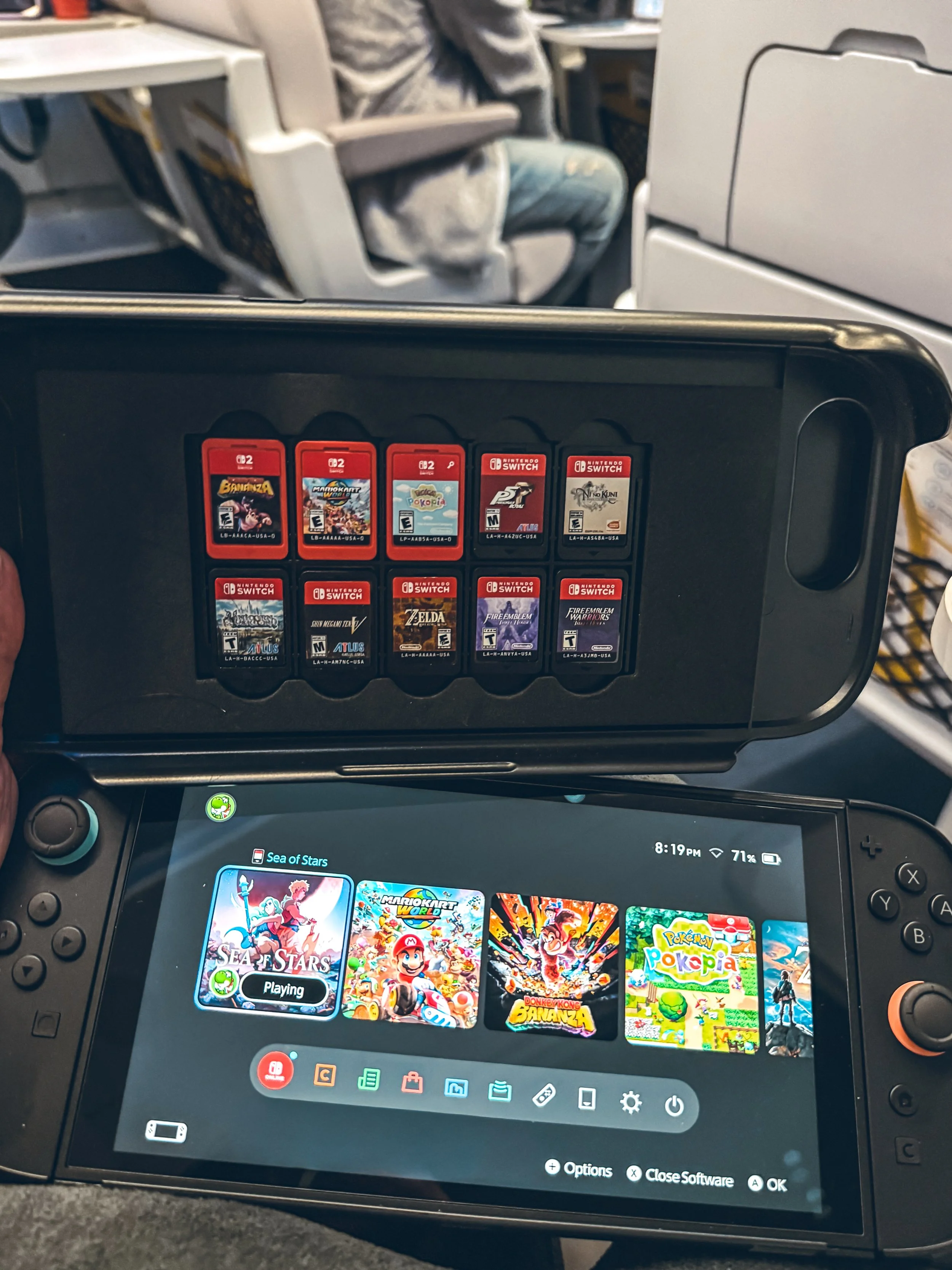
JSAUX Protective Case. I have the same case for the Steam Deck and it’s great for keeping the low profile in my bag.
For my travel style specifically, the Switch 2 hits a sweet spot that no other device has managed to match. I tend to travel light, move frequently between locations, and squeeze gaming into short windows of downtime rather than long dedicated sessions. The Switch 2 fits naturally into that rhythm. It's easy to pull out for twenty minutes at a gate, just as easy to use for an hour before bed in a hotel, and simple enough that I never feel like I'm managing a piece of technology while traveling.
Just as importantly, it doesn't ask much of me. I don't spend time tweaking settings, deciding between dozens of installed games, or worrying about whether I packed the right accessories. I grab the console, a few games, and I'm ready to go. That simplicity has become one of the things I value most when I'm away from home.
The older I get, the more I appreciate the value of limitations. Travel has a way of reinforcing that lesson. When you're living out of a backpack or suitcase, every item you bring is a deliberate choice. The Switch 2 applies that same philosophy to gaming. By limiting what comes along for the journey, it removes the noise, reduces the endless scrolling, and makes it easier to focus on the experience right in front of me.
The Steam Deck remains one of the most impressive gaming devices I own, and I still use it regularly. But when it's time to pack for a trip, the Switch 2 is usually the device that earns a spot in my bag. Somewhere between airport gates, train rides, and hotel rooms, I realized that I didn't need access to every game. I needed a reason to commit to a few of them. In the end, the device that travels best isn't the one that carries the biggest library--it's the one that helps me reach the credits.