1. What is the Creature?
The Tikbalang is one of the most recognizable creatures in Filipino mythology, often described as a towering being with the head of a horse and the body of a man. In many stories, it is known for leading travelers astray, causing them to lose their way even when they are walking along a path they know well. A person can leave home confident that they know exactly where they are going, only to find themselves wandering in circles without understanding how they became lost.
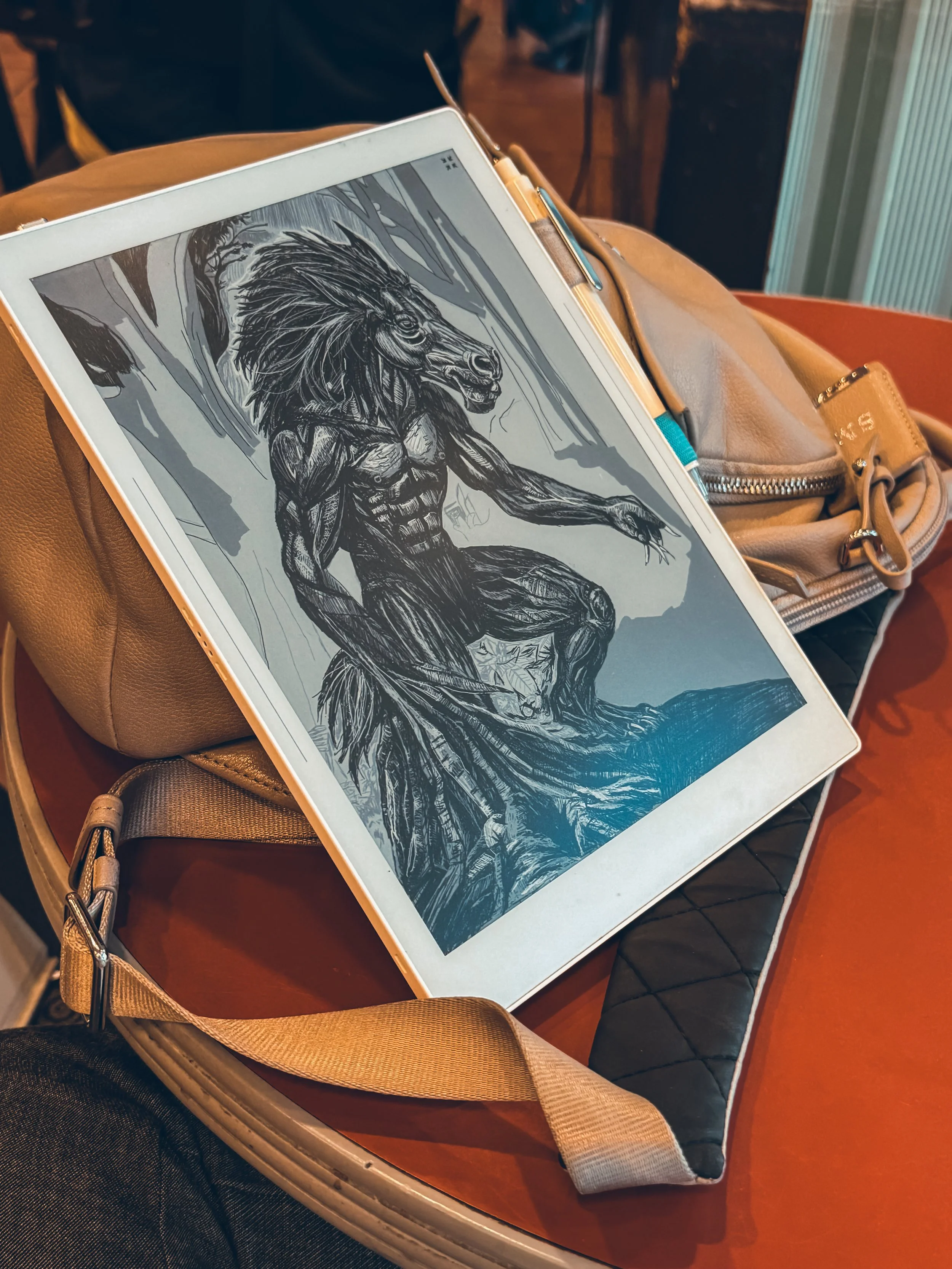
For my rendition of the Tikbalang, I wanted to focus less on its physical appearance and more on the feeling it creates. In my version, the Tikbalang does not stand in the middle of a trail waiting to be seen. Instead, it blends into the forest itself. It moves between the trees and shadows so naturally that it becomes part of the landscape. Most of the time, you do not see it at all. You sense its presence before you ever lay eyes on it.
You feel the hairs on the back of your neck stand up. You hear movement somewhere in the distance. You catch a glimpse of something shifting between the trees, but when you turn your head, there is nothing there. The forest suddenly feels unfamiliar even though it looked welcoming only moments before. The Tikbalang has not changed the forest. It has simply changed the way you experience it.
According to folklore, there are several ways to overcome a Tikbalang. One method is to turn your shirt inside out, which is said to confuse the creature and break its spell over you. Another method requires far more courage. If a person can manage to jump onto the Tikbalang's back and hold on long enough to pluck a hair from its mane, the creature loses its advantage and is forced to acknowledge the rider.
As a child, I found these stories frightening because they made the world feel unpredictable. As an adult, I find myself returning to them because they describe a feeling that is surprisingly familiar.
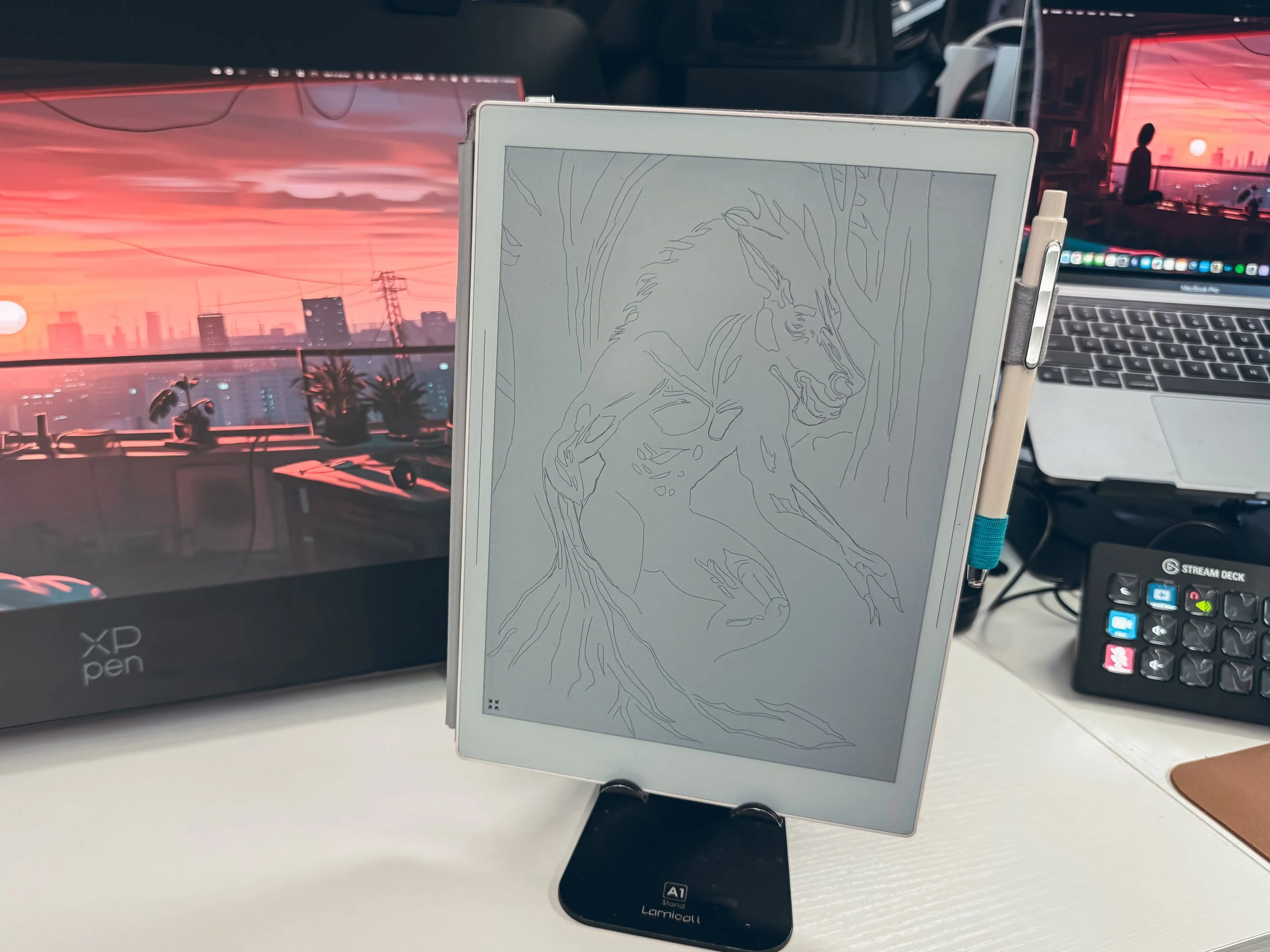
initial outline done in Needle Point Pen .1 in Dark Grey.
2. What Part of the Diaspora Does This Creature Parallel?
For me, the Tikbalang represents the feeling of being lost between worlds.
One of the strongest memories I have from growing up in the diaspora comes from attending Filipino gatherings. These events were always filled with family, food, laughter, and stories, yet there were moments when I felt like I was standing just outside the conversation looking in. People would naturally shift between dialects and languages that I did not understand, and although I recognized the warmth in the room, I often felt disconnected from the words being spoken around me.
As I stood there listening, I would find myself hoping that nobody would ask me a particular question. Eventually, however, someone almost always did.
"Do you speak the language?"
When I answered no, there was often a look that followed. It was not anger and it was not hostility. It was more of a quiet disappointment, as though I had somehow failed a test I did not know I was taking. The message was rarely spoken directly, but it was often implied that I should learn.
What always stayed with me was that nobody ever explained how.
Nobody handed me a book. Nobody recommended a class. Nobody offered a list of resources. At that point in time, we did not have language learning apps, online communities, podcasts, YouTube channels, and digital archives available at the touch of a button. The expectation existed, but the roadmap did not.
Looking back, that experience reminds me of the Tikbalang.
The creature does not force a traveler off the path all at once. Instead, it creates doubt. The traveler begins questioning every turn and every landmark until they no longer trust their own sense of direction. In much the same way, I began questioning my own place within my heritage. I wondered whether I was Filipino enough, whether I was missing something important, and whether I would ever feel fully connected to a culture that was already supposed to belong to me.
The more I focused on those questions, the more lost I felt.
Like my rendition of the Tikbalang hidden among the trees, these feelings were difficult to see directly. I could not point to a single moment or a single person as the source of them. Instead, they existed in the background, quietly influencing how I viewed myself and my relationship to my culture.
That is why the Tikbalang became such a powerful symbol for me. It represents the uncertainty that many people in the diaspora carry with them. It represents the feeling of knowing where you come from while still trying to figure out how you fit within that story.
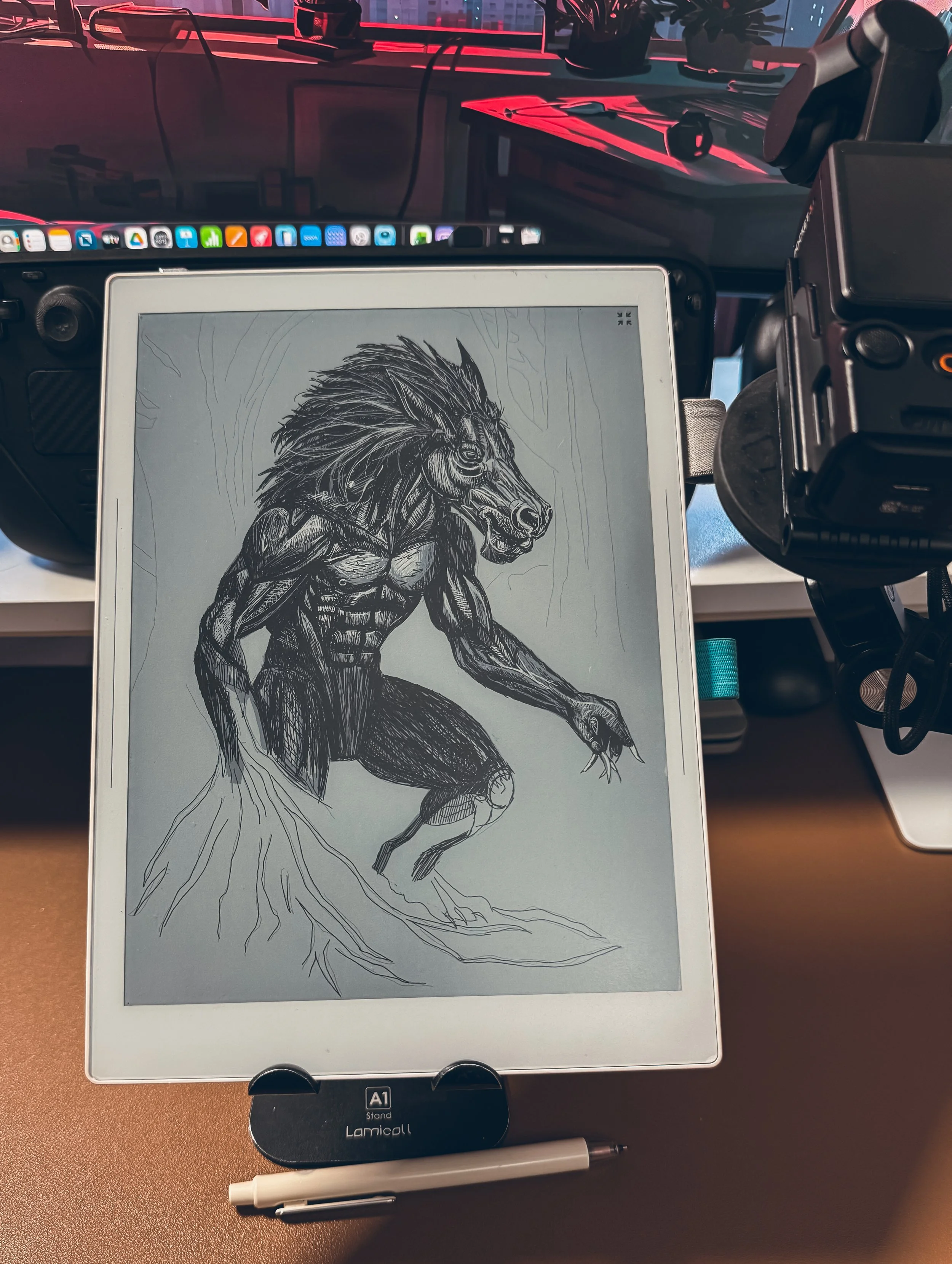
Between Needle Point and Calligraphy Pen for shading.
3. How Do You Battle This Creature?
According to folklore, one way to overcome a Tikbalang is to turn your shirt inside out. While that may sound like a simple superstition, I have come to appreciate the symbolism behind it.
For me, turning my shirt inside out represents turning my perspective inside out. It means questioning assumptions that I carried for years about what it means to belong. It means letting go of the belief that there is only one correct way to be Filipino and recognizing that identity is often more complicated than a checklist of languages spoken, traditions practiced, or customs remembered.
As I began exploring my heritage more deeply, I realized that I had access to resources that were unavailable to me when I was younger. I could read books, listen to podcasts, watch documentaries, connect with communities online, and learn from people willing to share their experiences. Instead of focusing on what I did not know, I began focusing on what I could learn. In many ways, that shift in perspective helped me find my bearings again.
The second way to battle a Tikbalang is to jump onto its back and pluck a hair from its mane. Out of all the stories associated with the creature, this is the one that resonates with me the most because it requires a person to confront the very thing that frightens them.
For me, that confrontation happens through art.
I have always been fascinated by Filipino mythology, but I have also been intimidated by it. The Tikbalang in particular has always occupied a space somewhere between curiosity and fear. There is something unsettling about a creature that remains hidden until the moment it decides to reveal itself.
By choosing to draw the Tikbalang, I am doing more than creating an illustration. I am taking something that once existed only in stories, fears, and imagination and giving it form. Every sketch forces me to spend time with the creature instead of avoiding it. Every line, every shadow, and every detail requires me to look directly at something that once made me uncomfortable.
In that sense, drawing the Tikbalang becomes my version of climbing onto its back.
Finishing the drawing becomes my version of plucking a hair from its mane.
The goal is not to destroy the creature or erase it from existence. The goal is to understand it. The same is true of my diaspora journey. I may never learn every language, know every tradition, or uncover every story connected to my heritage, but each drawing, each book, each conversation, and each piece of research brings me one step closer to understanding the path I am walking.
The Tikbalang is still somewhere in the forest, but it no longer feels like an enemy waiting to lead me astray. Instead, it has become a guide that reminds me that getting lost is sometimes part of finding your way home.
Interested in more?