Race day finally arrived—the peak of everything I had trained for, planned for, saved for, and quietly carried in my head for months. It felt like standing on the edge of a story I’d been writing with every step leading up to China, and now the next page was about to turn whether I was ready or not.
The night before, it rained.
Not a gentle rain either—the kind that makes you think about slick stone, eroded steps, and the worst-case scenarios your brain loves to rehearse when you’re trying to sleep. Weather reports warned the rain might continue, and that had everyone uneasy. The irony was that inspection day had been brutally hot. Heat that clung to you with nowhere to hide because on the Wall there isn’t shelter the way we’re used to—just towers every so often, spaced out like punctuation marks in a sentence that goes on forever.
But the bigger worry wasn’t even the rain. It was the steps.
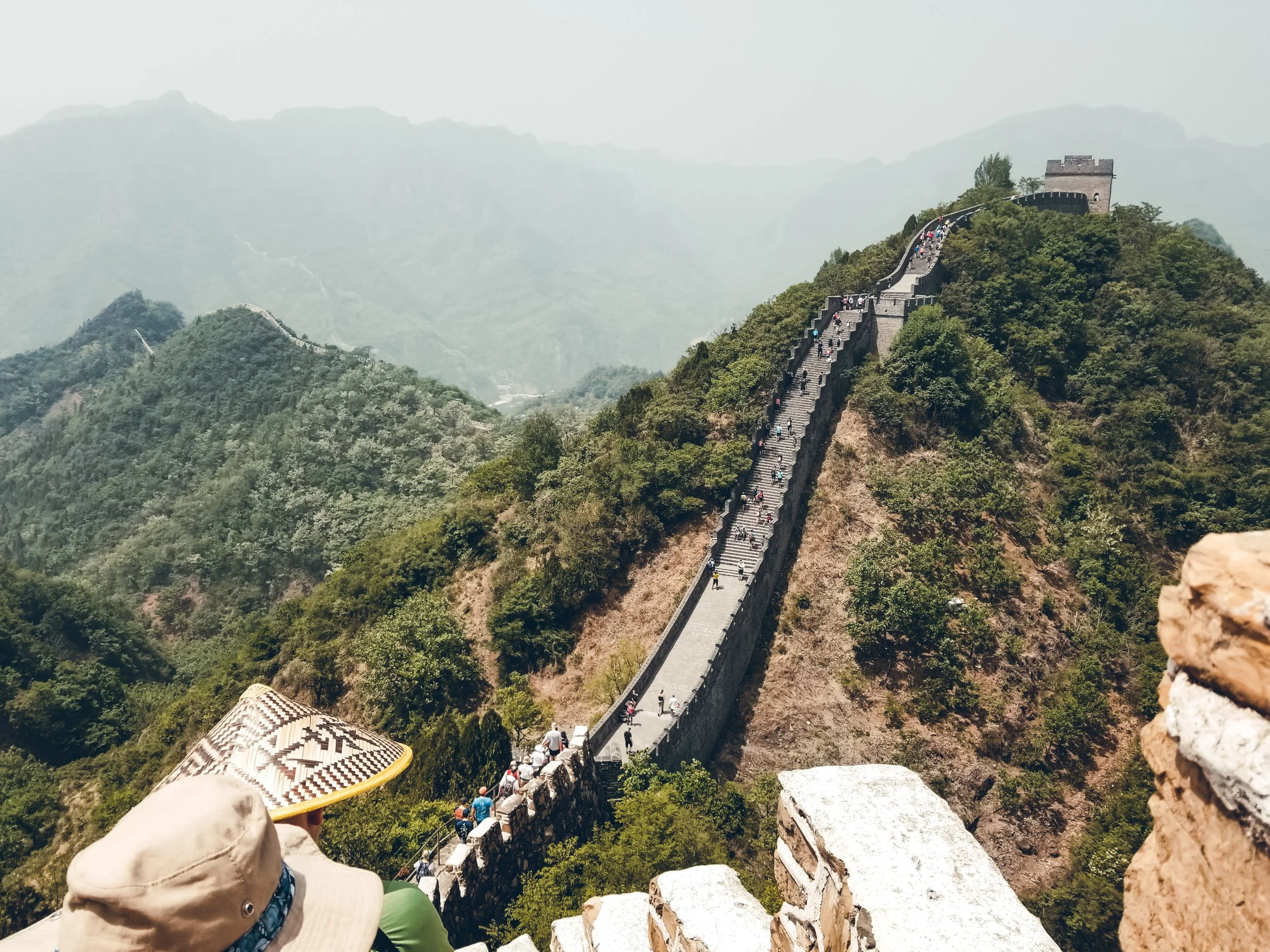
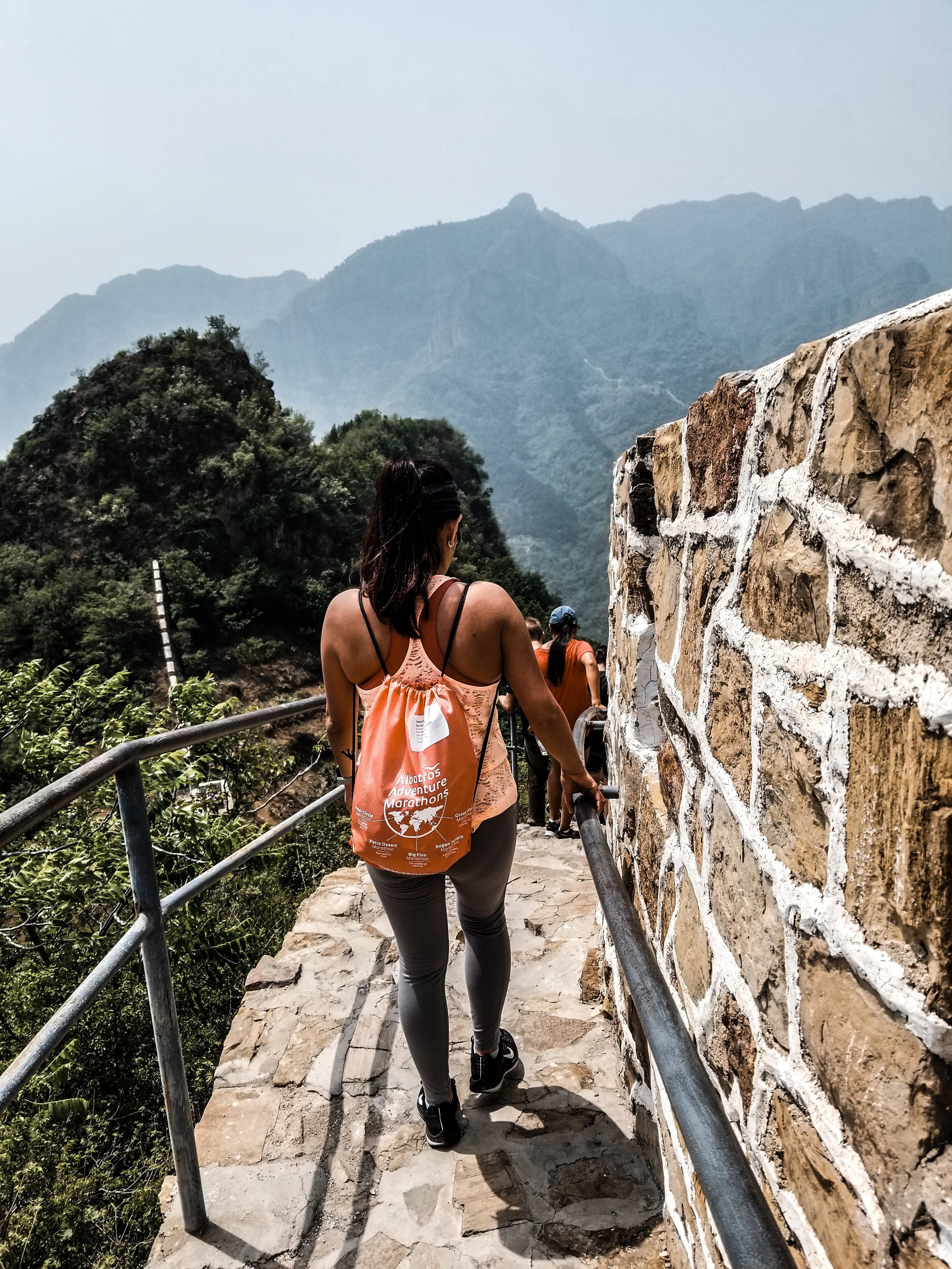
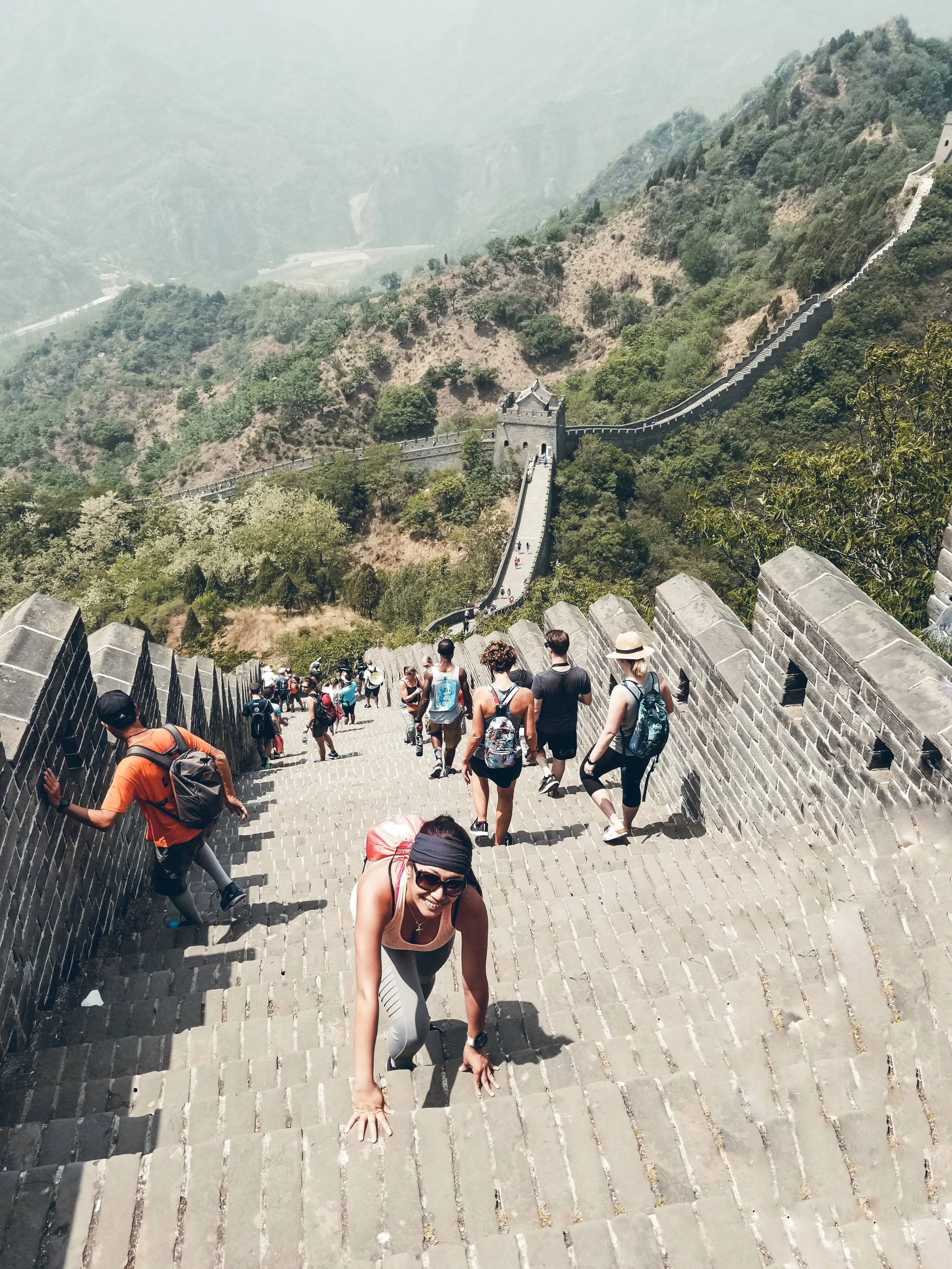
The day before, we’d seen how steep some sections were—so narrow that only one person could pass at a time. Some parts were worn down from centuries of weather and footsteps, the stone rounded and uneven in a way that made you realize this wasn’t a “race course” built for athletes. This was history. This was old and real and indifferent to your pace.
Those were the sections that lived in the back of my mind.
That morning, my roommate and I fell into our own pre-race rhythm. She was racing for time. I was racing for the experience. Two very different intentions—both completely valid. Hers was sharp focus. Mine was reverence. And somehow, sharing the same room with two different reasons made the whole thing feel even more human.
The bus ride to the start line was quiet.
Not awkward quiet—ritual quiet. The kind where everyone is inside their own head, tightening shoelaces in their mind, rehearsing what they’ll do when it hurts, when it gets steep, when their lungs start negotiating. I could feel the group collectively turning inward, each person stepping into their own private ceremony.
Then we arrived.
And the quiet broke into a buzz so electric I swear I could’ve levitated.
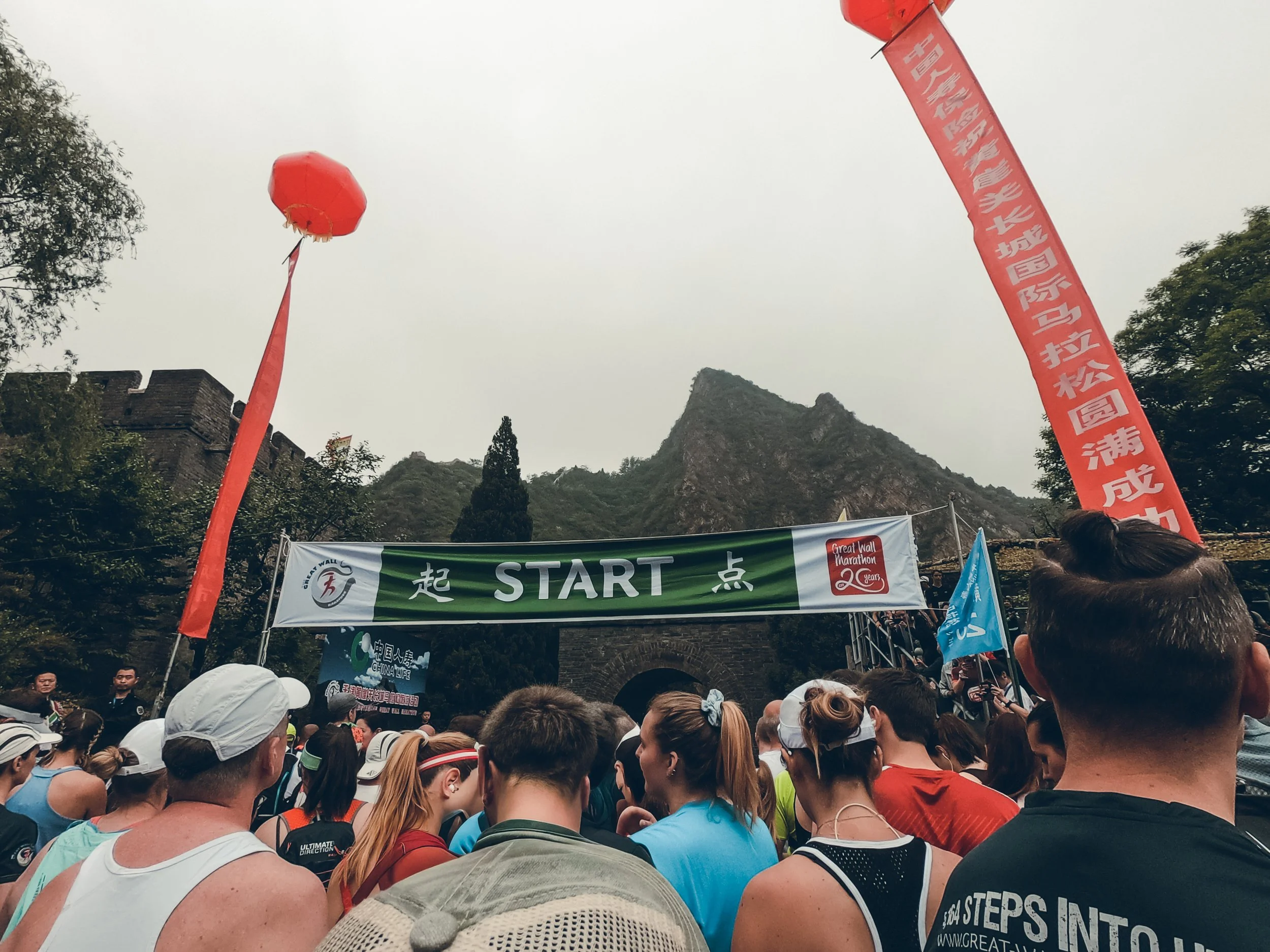
At the start line, the air felt charged—like the world had narrowed into one moment and everyone was standing inside it together. We went through the opening ceremony, then a pre-race warm-up that felt both hilarious and sacred—hundreds of people moving as one, stretching under a sky that couldn’t decide what it wanted to be.
Then they started calling waves.
Corrals filled. Runners filed in. The closer it got to my turn, the more I could feel my nerves rising like water about to boil over. And when I stepped into my corral, it hit me: this is it.
All the waiting had ended.
When the gun finally went off, I felt my heart slam against my ribs like it was trying to get out first. Pure excitement. Pure adrenaline. The kind of energy that feels almost too big for your body.
And then—immediately—reality.
Remember that steep incline we were spared during inspection day because the bus drove us up?
Yeah.
Race day said, Earn it.
That climb kicked my butt in a way that humbled me fast. The kind of steep where your legs are awake before your brain catches up, where you can feel your breath turn into something you have to manage carefully—like a resource you don’t want to waste too early.
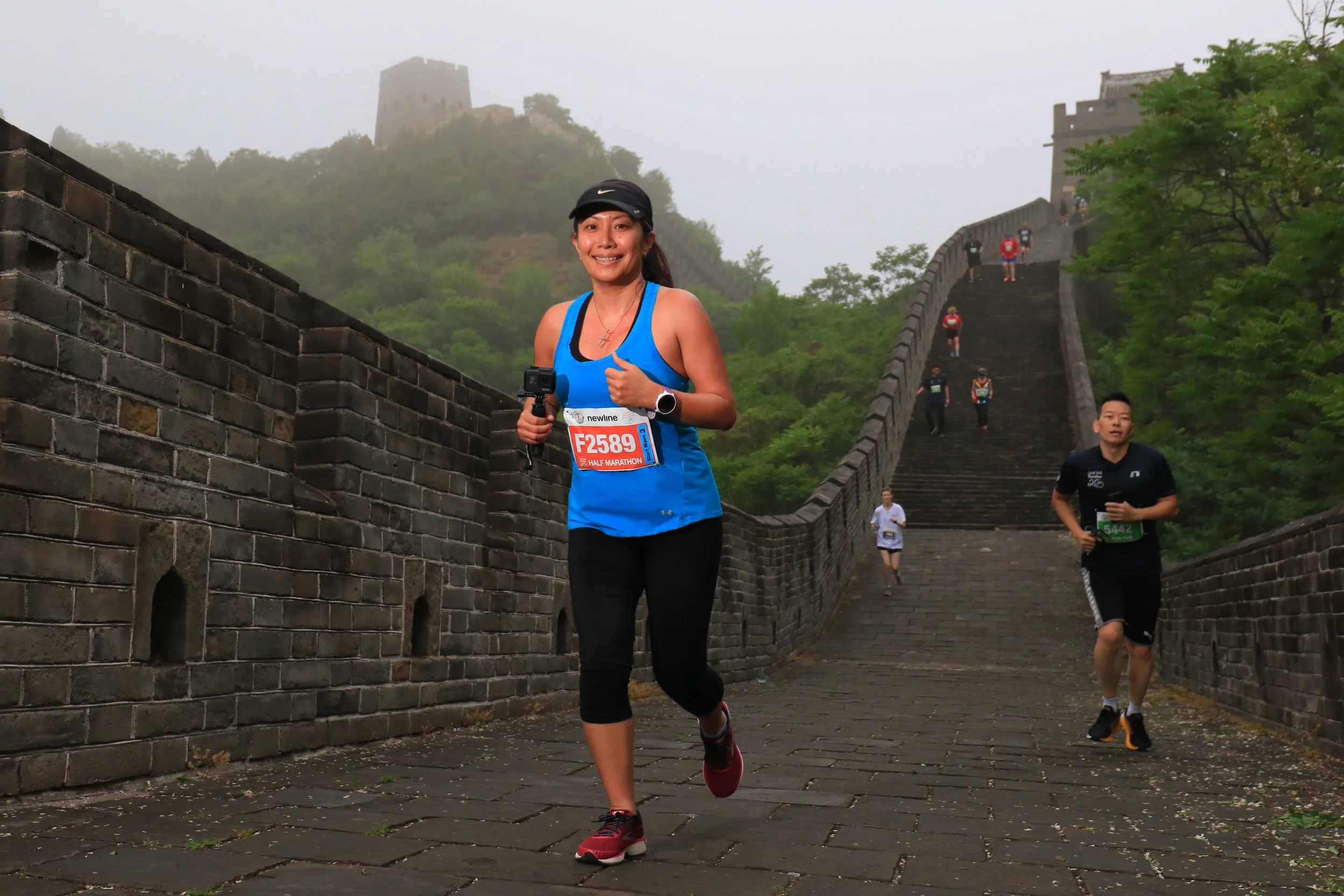
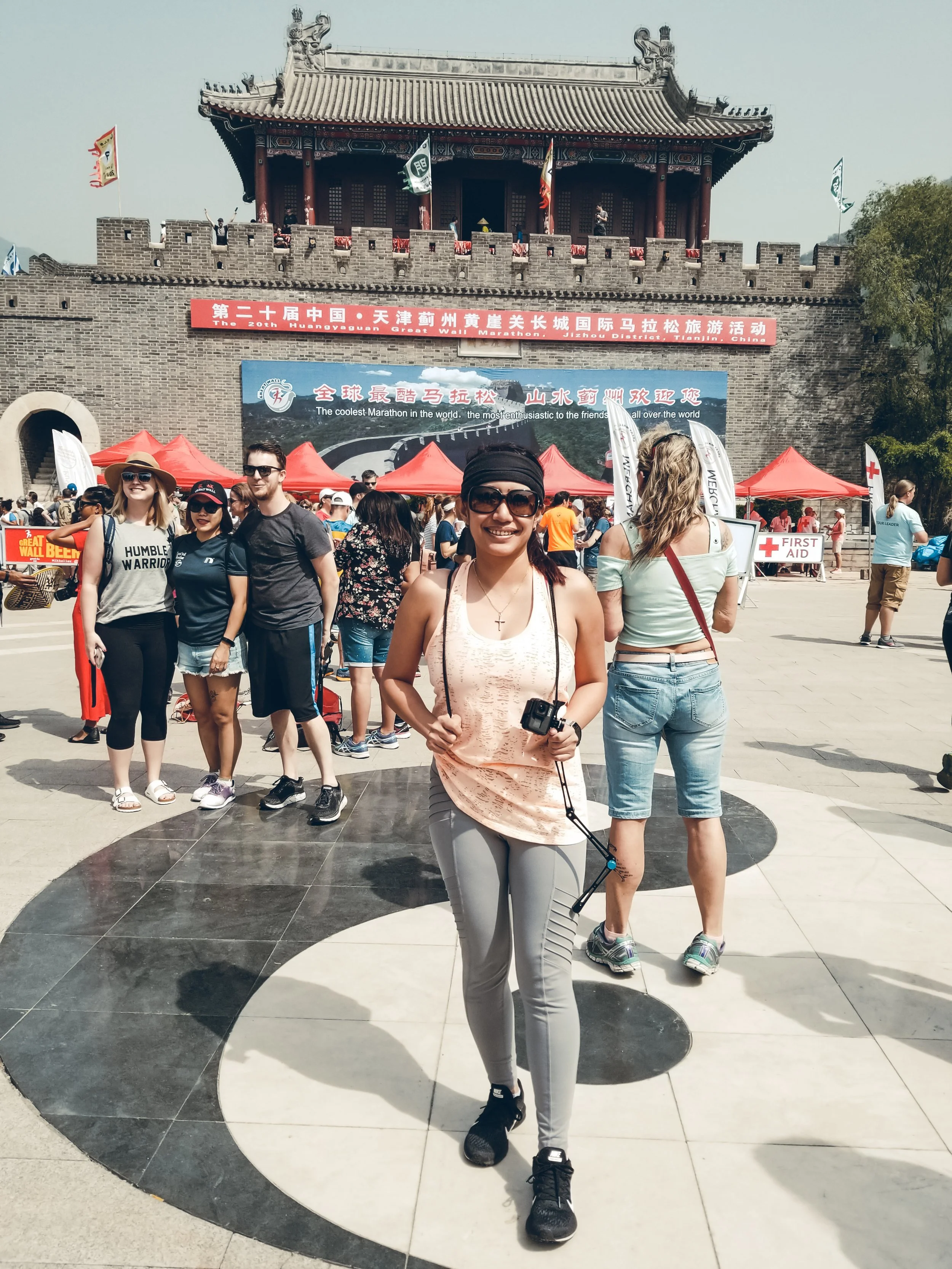
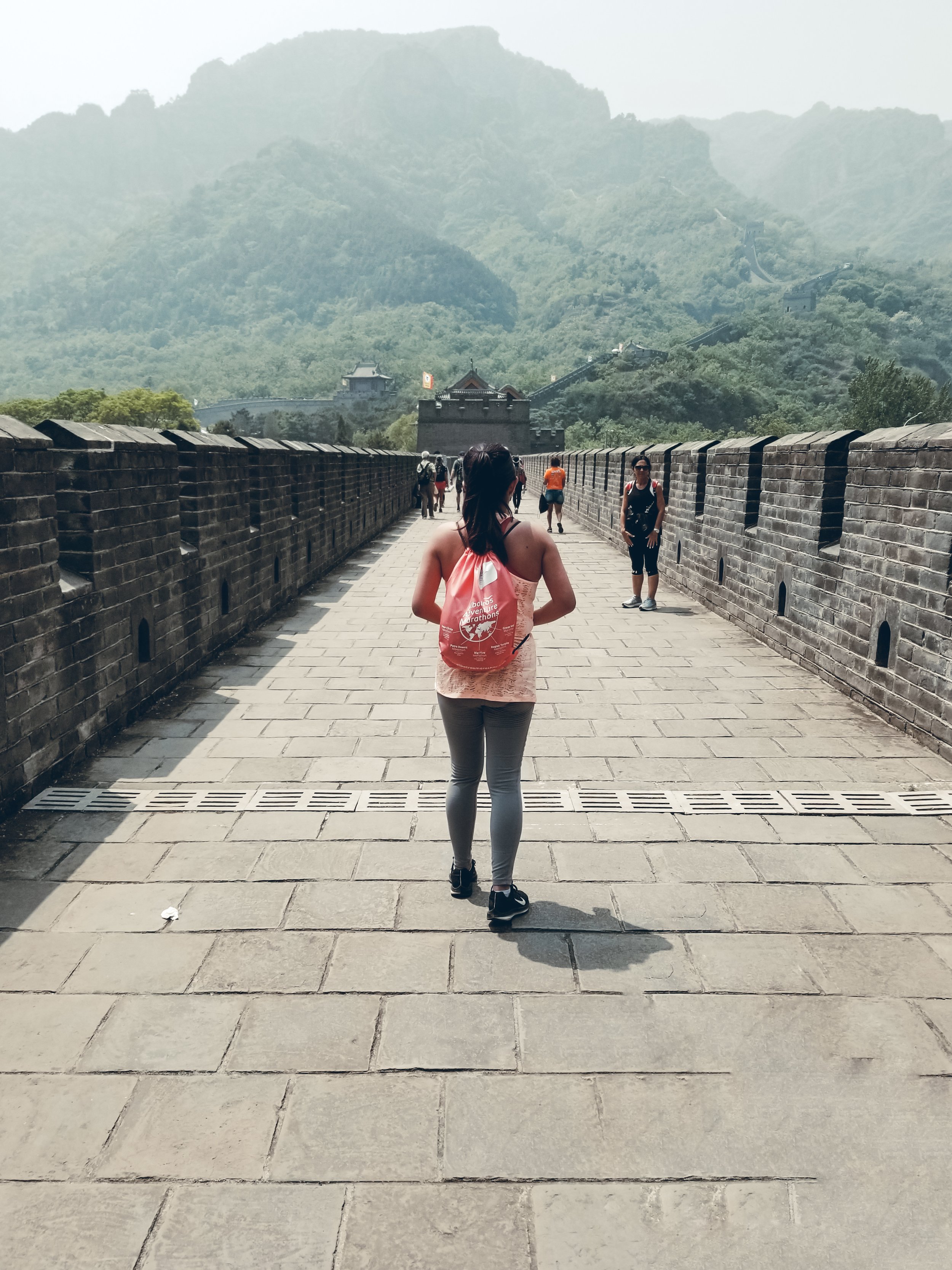
And then we reached the entrance to the Great Wall.
And something in me quieted.
All the nerves I’d been carrying disappeared like they had served their purpose and could finally clock out. I was standing there, about to run on something I’d only ever seen in textbooks, movies, and that distant part of imagination where you don’t really believe you’ll ever go.
Race day was completely different from inspection day.
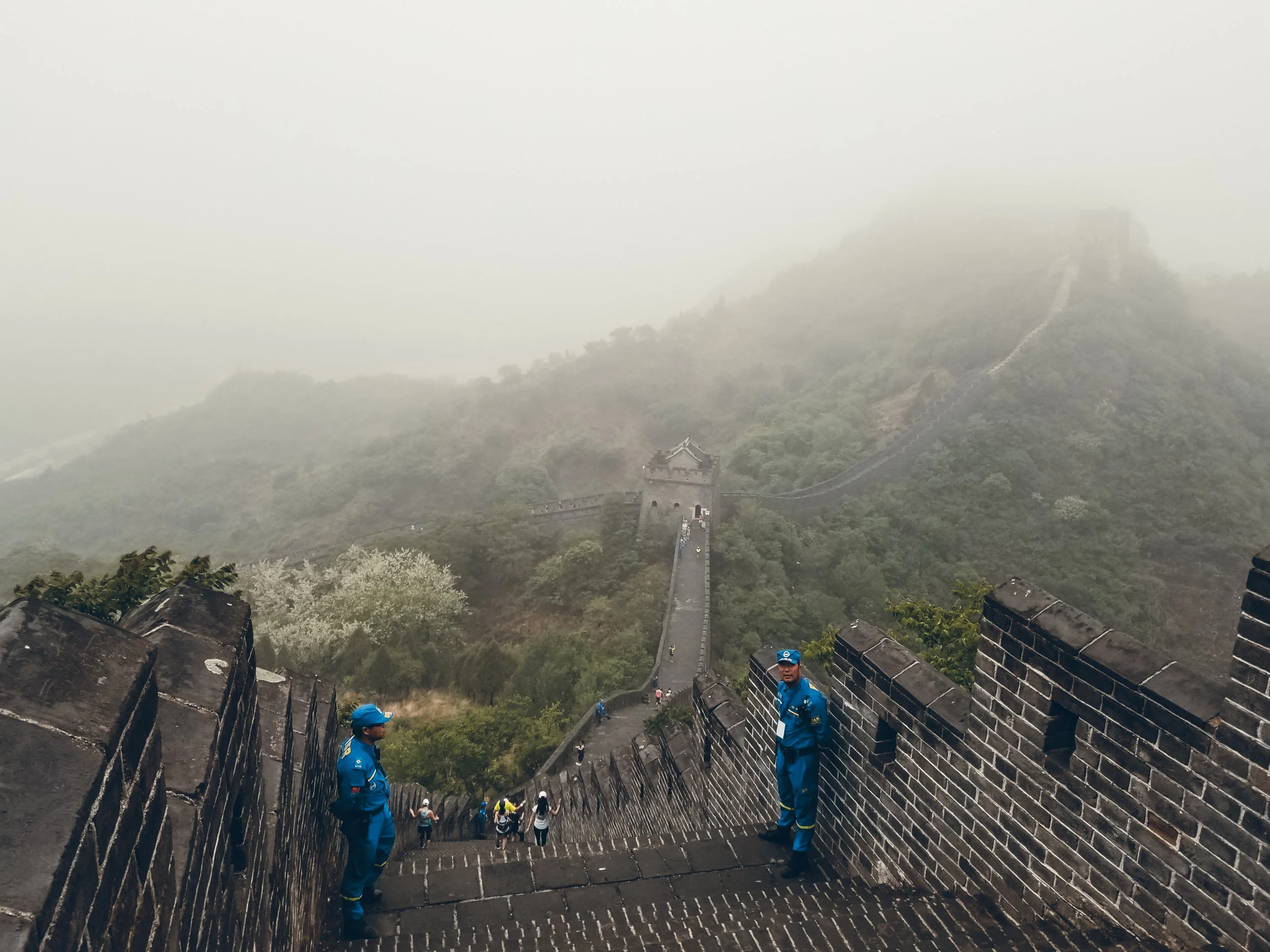
The day before had been hot and bright. Now it was cold and foggy. The Wall looked like it was rising out of the mist, like it was being revealed piece by piece—tower by tower—only to those willing to climb into it. The fog didn’t last long, but while it did, it was unreal. Beautiful in a way that made everything feel hushed, like the Wall itself was asking us to move with respect.
I jogged when I could, walked when I needed to, and tried to stay present—because I didn’t come here to rush past it. I came here to feel it.
And then we reached the villages.
That part became one of my favorite memories of the entire race.
As we ran through, villagers came out to greet us—cheering, clapping, smiling like we were something worth celebrating. There was no shared language, but it didn’t matter. Some kids ran alongside runners, matching strides for a few moments like it was the most natural thing in the world. It was such a profound kind of kindness—simple, generous, real.
It felt like being welcomed into someone else’s home without having to ask.
Halfway through the race, I saw something that rewired my definition of strength.
A runner who had lost one of his legs to cancer was out there doing the race on crutches and pure willpower. He climbed and hopped through the same sections we all did—narrow passes, steep rises, uneven stone—refusing to be edited out of the experience. Watching him was one of the most impressive feats I’ve ever seen with my own eyes. It wasn’t “inspirational” in the cliché way. It was real. It was a person choosing life with everything he had left and then some.
I remember thinking: If he can do this, then I can keep going.
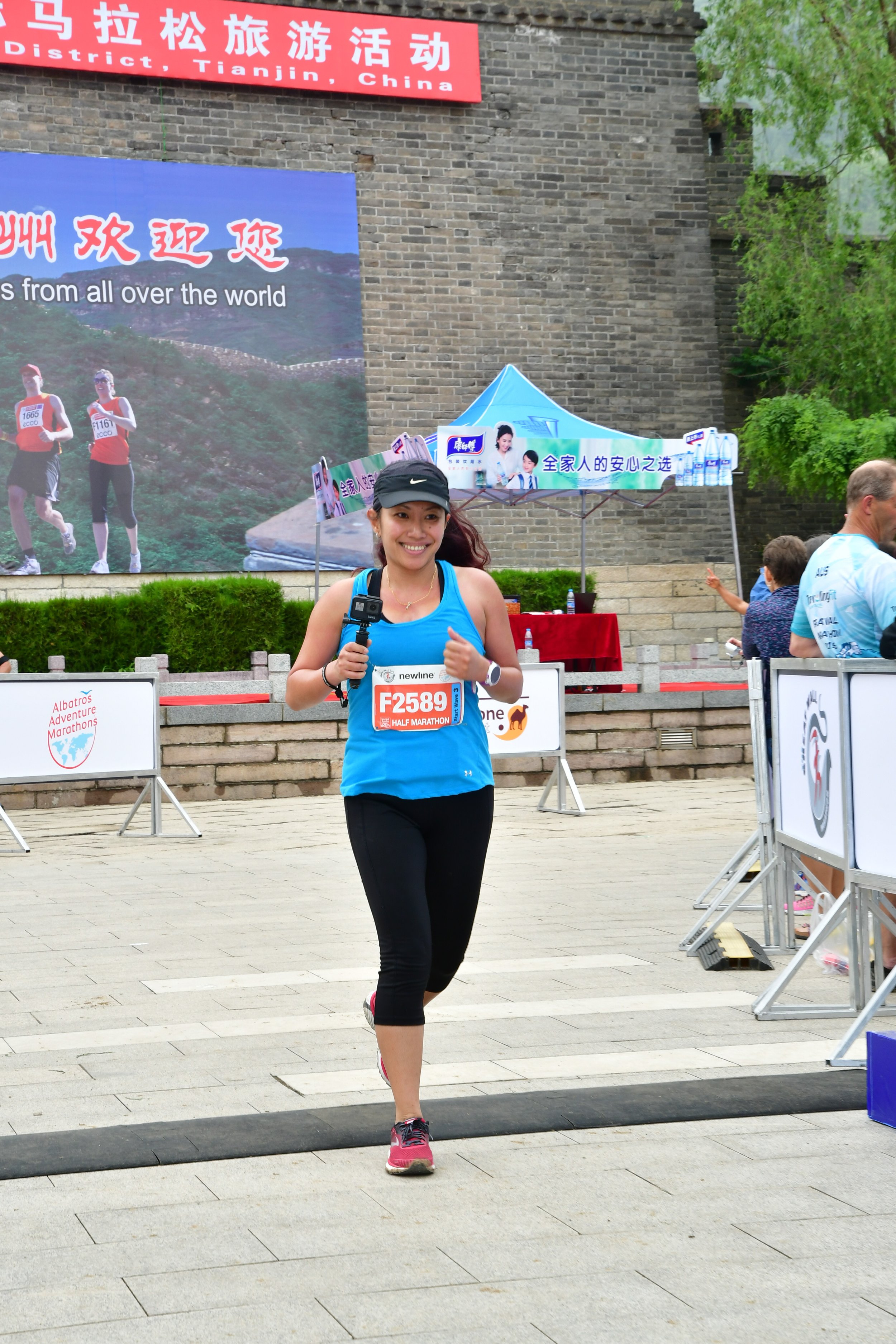
By the time mile 13 came around—right at that finish stretch for the half marathon—I was wrecked. My legs felt like they belonged to someone else. My lungs were on strike. My mind was trying to bargain: Just slow down. Just walk. Just stop.
And I was close to tears—not because I was sad, but because exhaustion has a way of stripping you down to your most honest self. There’s nowhere to hide when your body is done pretending.
When I finally crossed the finish line, joy hit me so hard it almost hurt.
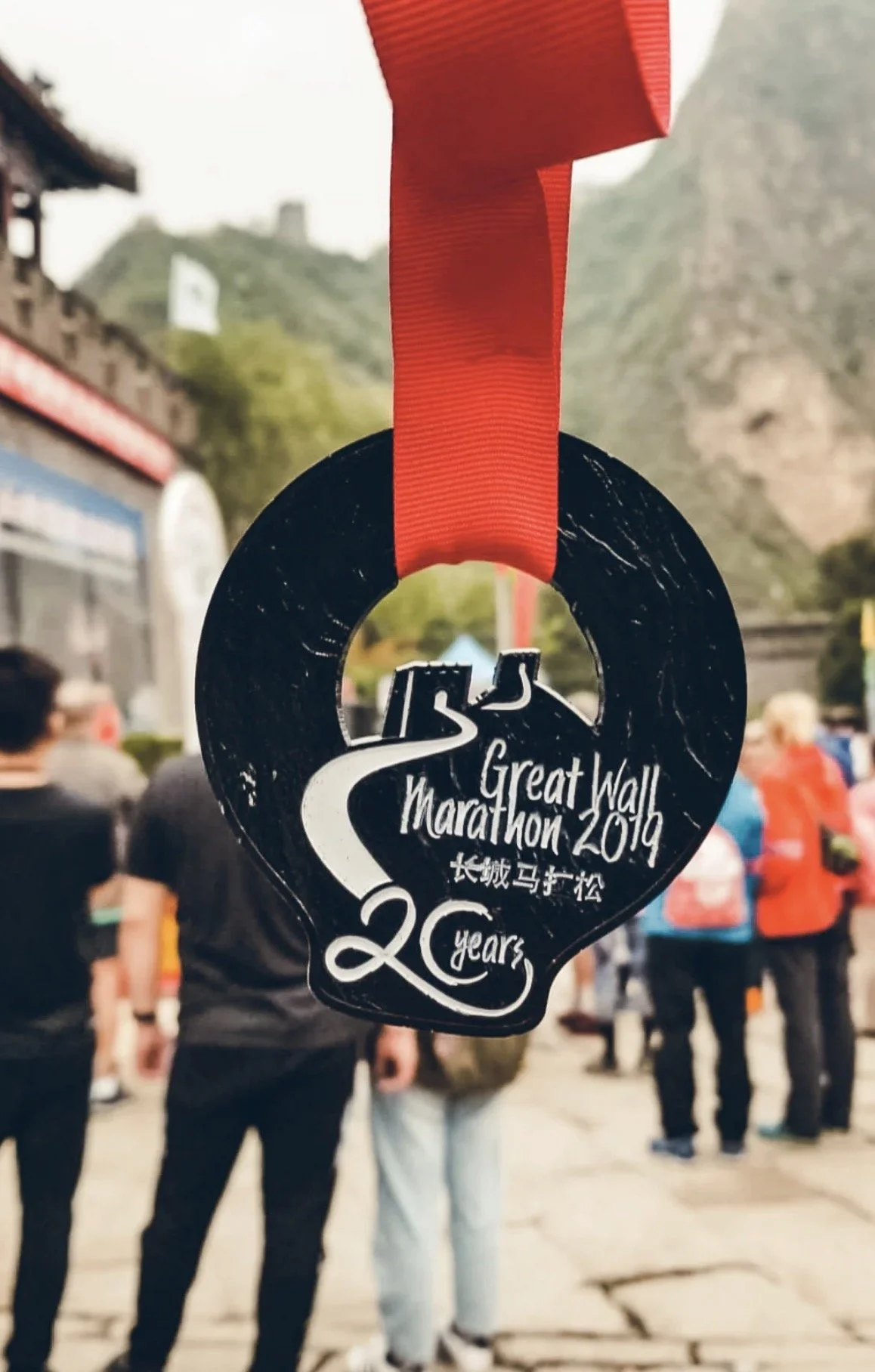
When they hung the medal around my neck, I felt everything at once—relief, pride, disbelief, gratitude. I wasn’t the only one either. A lot of people cried crossing that line. Not because it was dramatic, but because it meant something. Because nobody runs the Great Wall Marathon by accident. You have to want it enough to keep choosing it—over comfort, over fear, over the easier version of your life.
I hobbled over to the food tables and ate what I swear was the best sandwich of my life. I don’t even remember what was on it. It could’ve been cardboard with mayo and I would’ve called it gourmet. Post-race hunger is spiritual.
Back at the hotel, I washed up, took a nap, and later went out with a few people from the group. That’s another thing race trips give you—temporary family. People you might never see again, but who feel like they’ve known you for years because you shared something intense and honest together.
The next morning, we boarded the bus back toward Beijing and checked into another hotel. The race portion was over, but the journey kept unfolding. We had the option to join tours, and I did—because I didn’t come all this way to only meet the Wall.
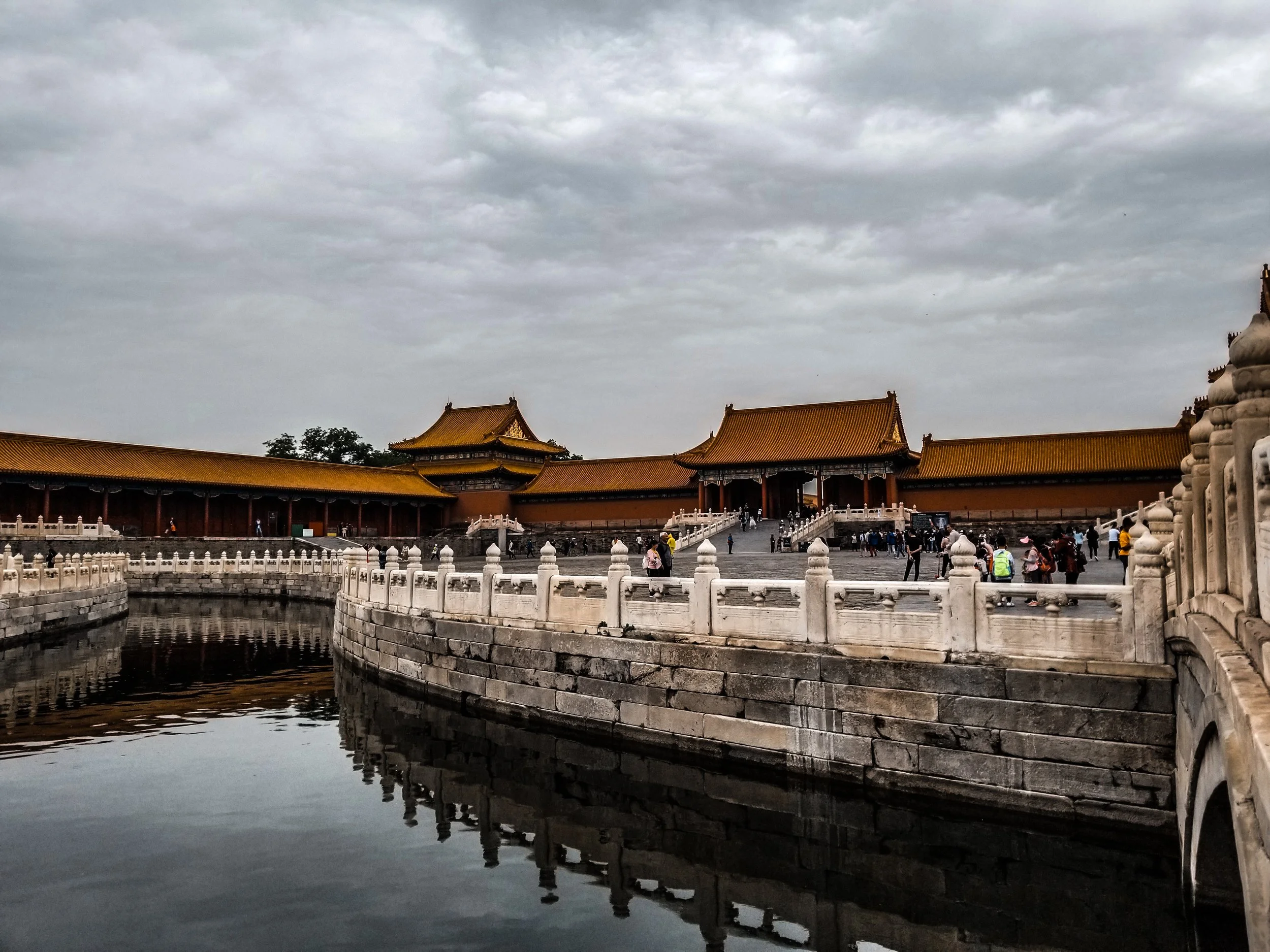
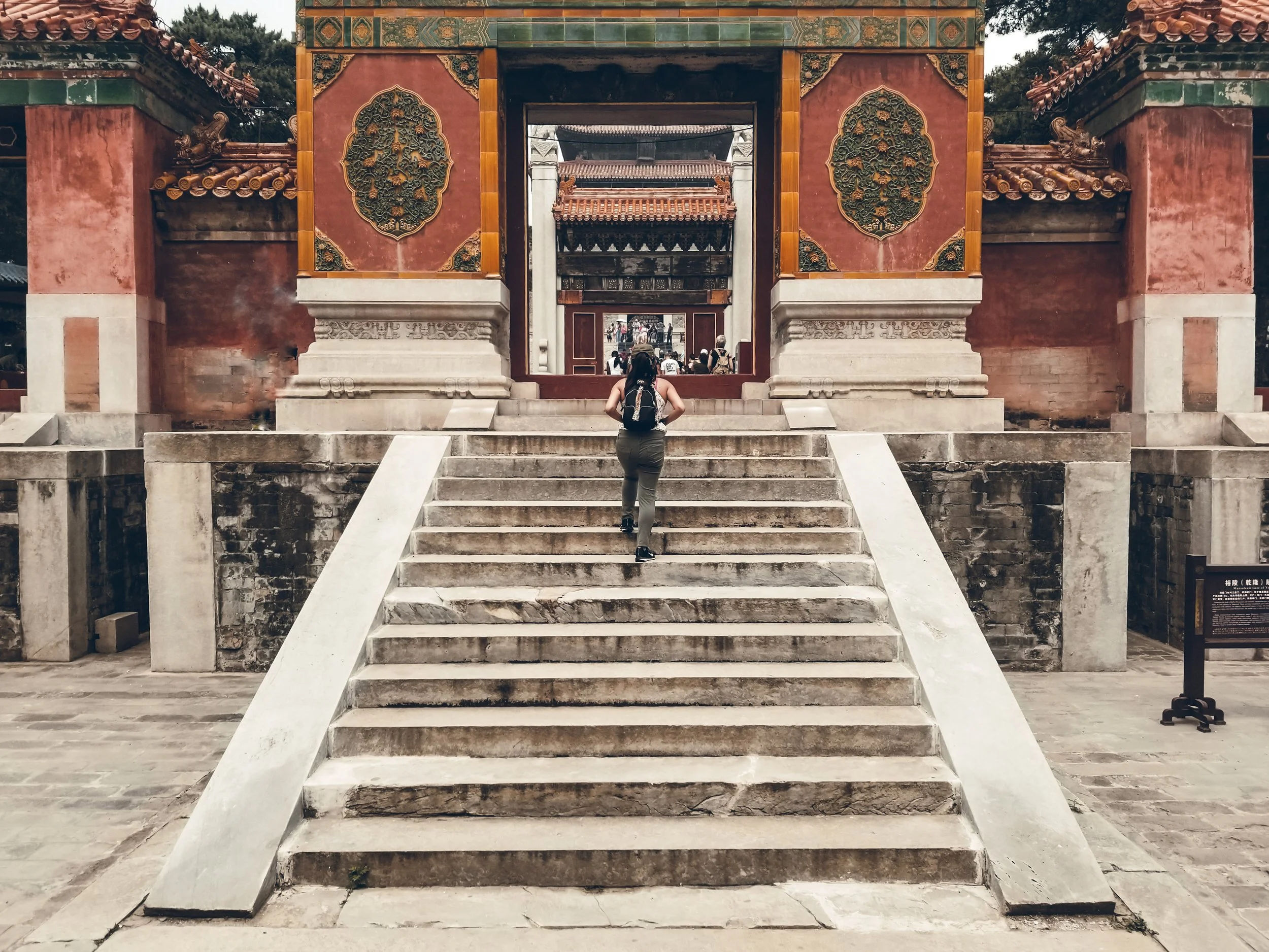
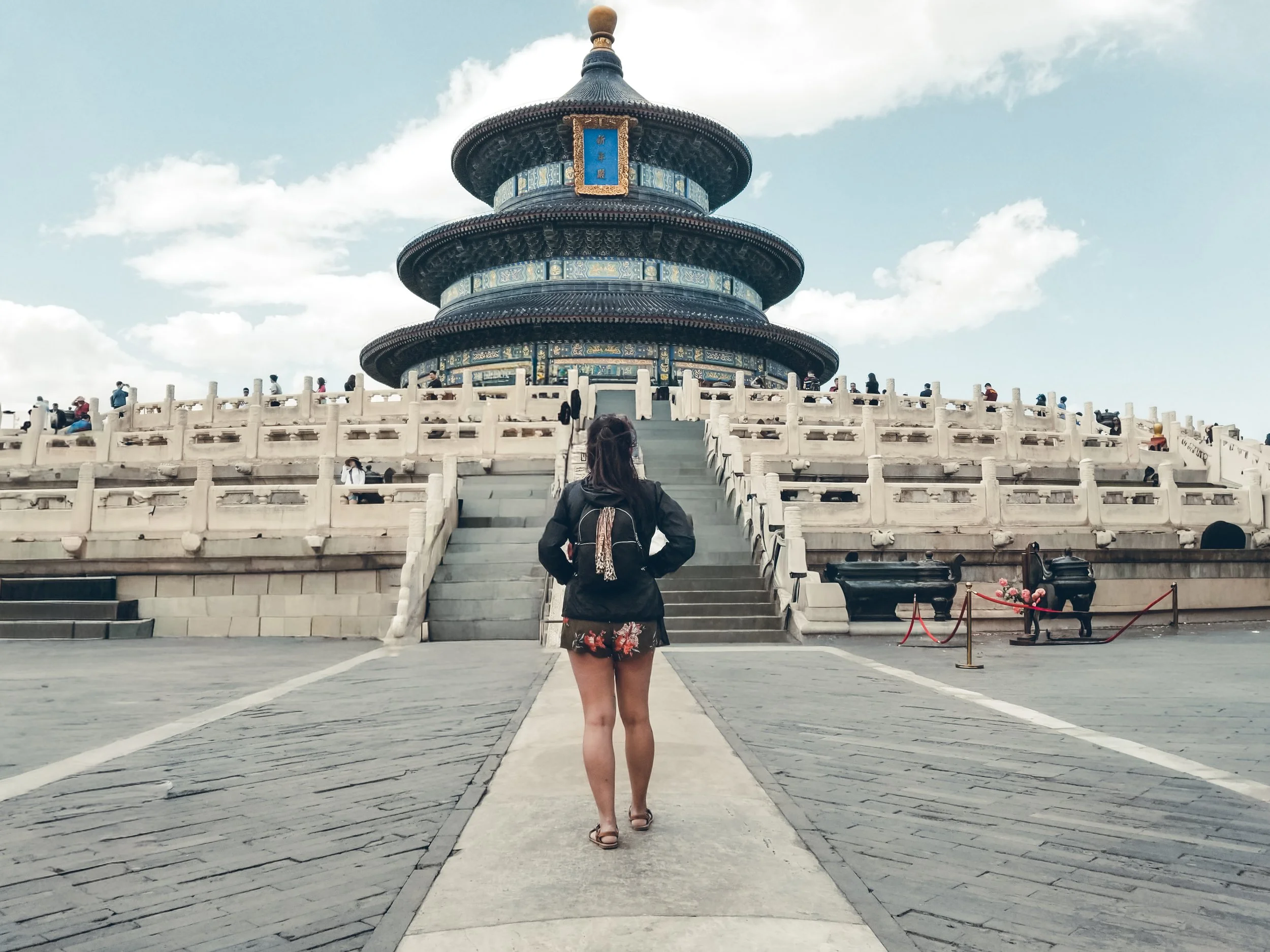
I went to the Forbidden City. Saw Tiananmen Square. Visited the Temple of Heaven. Went to the Ming and Qing Tombs. Walked through places that carry so much weight and history that you can feel it in the air—even if you don’t fully understand it, even if you’re only borrowing that space for a day.
And then there was the farewell dinner provided by the race organization—one last gathering where everyone looked different than they did at the start line. Softer. Happier. Changed.
I made friends. I met incredible people. Some I’ll probably never see again—and that’s okay.
Because not every connection is meant to last forever. Some are meant to exist for one perfect chapter, to remind you what humans are capable of when they decide to show up.
This trip changed me.
Not just because I ran on the Great Wall.
But because it reminded me of something I had forgotten:
That I can trust myself.
That I can plan, adapt, ask strangers for help in an airport, walk into a new country alone, and still find my way.
That I can do hard things—even when the weather is uncertain, the steps are eroding, the path is narrow, and I don’t know exactly what version of me will cross the finish line.
And maybe that’s what the Great Wall gave me most.
Not a medal.
A mirror.
Part 3 of 3 Solo Trip To China